Coins, Currency, and Medals - Overview

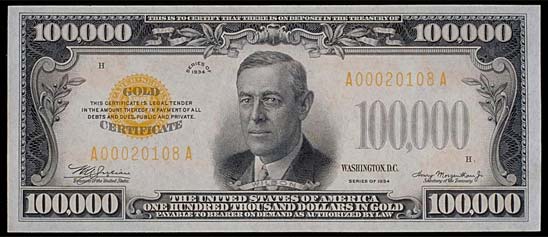
The Museum possesses one of the largest numismatic collections in the world. The collections include over 1 million objects, comprising coins, medals, decorations, and pieces of paper money. Among the many great rarities here are some of the world’s oldest coins, created 2,700 years ago. But the collection also includes the latest innovations in electronic monetary exchange, as well as beads, wampum, and other commodities once used as money. A special strength lies in artifacts that illustrate the development of money and medals in the United States. The American section includes many rare and significant coins, such as two of three known examples of the world's most valuable coin, the 1933 double eagle $20 gold piece.
"Coins, Currency, and Medals - Overview" showing 17 items.
Page 1 of 2
20.00 Dollar, Twenty Dollar Coin, 1907
- Description
- In 1905, President Theodore Roosevelt asked sculptor Augustus Saint-Gaudens to lead an effort to redesign American coinage. Saint-Gaudens developed a design that many consider the most beautiful American coin ever conceived. Work on the production version of the coin progressed through the winter and spring of 1907. Sadly, the artist himself now suffered from cancer, and would die of the disease at the beginning of August.
- It was left to his assistant, Henry Hering, to finish the work his master had begun. And Hering would be dogged every step of the way by a jealous competitor, Mint Chief Engraver Charles E. Barber.
- Towards the end of December 1907, this new, very beautiful gold coin entered circulation. It was closely based on Saint-Gaudens's original concept, complete with the forward-striding Liberty and the eagle in flight. But Henry Hering had lowered the relief by a small but crucial extent. The coin still could not be struck, once, on a high-speed press. But it could be struck, thrice, on a slower-speed machine.
- Under Hering's directions, and over Barber's objections, slightly more than twelve thousand "high relief" double eagles were minted in Philadelphia during the final weeks of 1907. Saint-Gaudens, Henry Hering, and Theodore Roosevelt had proved that a high-relief American coin could be made. Having won the battle, Roosevelt may have tired of the war. He had a good deal else on his mind, including upcoming elections, and the voyage of America's Great White Fleet around the world.
- Location
- Currently not on view
- Date made
- 1907
- obverse designer
- Saint-Gaudens, Augustus
- mint
- U.S. Mint, Philadelphia
- ID Number
- 1979.1263.00803
- catalog number
- 1979.1263.00803
- accession number
- 1979.1263
- catalog number
- 01553
- Data Source
- National Museum of American History, Kenneth E. Behring Center
United States, Ten Dollars, 1930 S
- Description
- United States Mint, San Francisco. Obverse: Head of Liberty facing left, with feathered headdress; stars above, date below. Reverse: Standing eagle facing left. Most of the run was melted. This is one of the finest survivors.
- Location
- Currently not on view
- Date made
- 1930
- designer
- Saint-Gaudens, Augustus
- mint
- U.S. Mint, San Francisco
- ID Number
- 1985.0441.1588
- accession number
- 1985.0441
- Data Source
- National Museum of American History, Kenneth E. Behring Center
Experimental 20 Dollars (1907)
- Description
- Someone once observed that a giraffe was a horse designed by a committee. The same might be said of this coin: what had seemed a good idea around a table in the boardroom proved to be an interesting but spectacular flop as it neared production.
- The coin resulted from a project that President Theodore Roosevelt began in 1905 to redesign American coinage. He commissioned sculptor August Saint-Gaudens to create the new designs, and Saint-Gaudens developed a plan for an ultra-high relief $20 coin. The coin here, which appears to have been struck early in 1907, followed Saint-Gaudens' basic designs, but there the similarities ended.
- This experimental coin contained twenty dollars' worth of gold, but it was squeezed into a coin the width of a ten-dollar piece. The discrepancy was handled by making the patterns much thicker than ordinary coins. Staff at the Mint wondered whether it was possible to decrease the diameter to have the best of both worlds: a coin in glorious high relief that didn't take quite as many blows of the press to create. The experiment failed. Although the patterns were unacceptable for commerce, word of their existence leaked out to the collecting community. An exasperated Mint Director wanted them called in and melted down. Somehow two escaped. Both are in the Smithsonian Collection.
- Location
- Currently not on view
- Date made
- 1907
- maker
- Saint-Gaudens, Augustus
- U.S. Mint
- ID Number
- 1985.0441.2099
- accession number
- 1985.0441
- catalog number
- 1985.0441.2099
- Data Source
- National Museum of American History, Kenneth E. Behring Center
United States, 20 Dollars, 1910 ("Roman" Finish Proof)
- Description
- United States Mint, Philadelphia. Obverse: Liberty with feather headdress, facing left. Reverse: Denomination and date within cereal wreath. The United States Mint experimented with a number of innovative surface treatments for its proof coinage between 1905 and 1915. These included matte and sandblast surfaces that reflected light back in unusual ways. They also included the application of a "Roman" finish, making the surfaces of gold coins look more golden, and more mellow. These experimental surfaces were applied to test new ideas regarding what would work and what would not. The surfaces were also placed there so that the coins that bore them became "special," and could be sold to collectors at a premium.
- Location
- Currently not on view
- Date made
- 1910
- mint
- U.S. Mint, Philadelphia
- maker
- Saint-Gaudens, Augustus
- ID Number
- 1985.0441.1320
- catalog number
- 1985.0441.1320
- accession number
- 1985.0441
- Data Source
- National Museum of American History, Kenneth E. Behring Center
United States, 20 Dollars, 1921
- Description
- United States Mint, Philadelphia. Obverse: Liberty striding towards the viewer, bearing olive branch and torch. Reverse: Eagle in flight above the sun. More than half a million double eagles were minted in 1921. Only about fifteen survived the melt down procedure later. This coin is outstanding, both for rarity and condition.
- Location
- Currently not on view
- Date made
- 1921
- mint
- U.S. Mint, Philadelphia
- maker
- Saint-Gaudens, Augustus
- ID Number
- 1985.0441.1476
- catalog number
- 1985.0441.1476
- accession number
- 1985.0441
- Data Source
- National Museum of American History, Kenneth E. Behring Center
United States, 20 Dollars, 1926-D
- Description
- United States Mint, Denver. Obverse: Liberty striding towards the viewer, bearing olive branch and torch. Reverse: Eagle in flight above the sun. This is one of a fairly small number of survivors of these coins. It is in exceptional condition.
- Location
- Currently not on view
- Date made
- 1926
- mint
- U.S. Mint, Denver
- maker
- Saint-Gaudens, Augustus
- ID Number
- 1985.0441.1505
- catalog number
- 1985.0441.1505
- accession number
- 1985.0441
- Data Source
- National Museum of American History, Kenneth E. Behring Center
United States, 20 Dollars, 1927-S
- Description
- United States Mint, San Francisco. Obverse: Liberty striding towards the viewer, bearing olive branch and torch. Reverse: Eagle in flight above the sun. Over three million double eagles poured out of the San Francisco branch mint in 1927. All but a dozen or so were eventually melted.
- Location
- Currently not on view
- Date made
- 1927
- mint
- U.S. Mint, San Francisco
- maker
- Saint-Gaudens, Augustus
- ID Number
- 1985.0441.1524
- catalog number
- 1985.0441.1524
- accession number
- 1985.0441
- Data Source
- National Museum of American History, Kenneth E. Behring Center
United States, 20 Dollars, 1932
- Description
- United States Mint, Philadelphia. Obverse: Liberty striding towards the viewer, bearing olive branch and torch. Reverse: Eagle in flight above the sun. About two dozen coins have survived from the 1932 double eagle mintage.
- Location
- Currently not on view
- Date made
- 1932
- mint
- U.S. Mint, Philadelphia
- maker
- Saint-Gaudens, Augustus
- ID Number
- 1985.0441.1610
- accession number
- 1985.0441
- catalog number
- 1985.0441.1610
- Data Source
- National Museum of American History, Kenneth E. Behring Center
$20 Pattern Coin, by Augustus Saint-Gaudens
- Description
- United States Mint, Philadelphia. Less than two dozen of these coins were struck. This kind of relief was never intended for a circulating coin, because it took nearly a dozen passes through the press to achieve. We should instead see these marvelous coins as testimony to the human spirit and to human curiosity: just how much relief could you obtain, and how long would it take to create it?
- This ultra high relief twenty has pedigree as well as beauty in its favor. Presdient Theodore Roosevelt gave it to his daughter as a Christmas present in 1907. Augustus Saint-Gaudens had presented it to the president, and it may have been the first piece struck. Roosevelt's daughter donated this coin to the Smithsonian in 1961.
- [reference no. Judd 1778]
- Location
- Currently not on view
- Date made
- 1907
- designer
- Saint-Gaudens, Augustus
- mint
- U.S. Mint, Philadelphia
- ID Number
- NU*236191.0001
- catalog number
- NU71628
- accession number
- 236191
- catalog number
- 236191.0002
- Data Source
- National Museum of American History, Kenneth E. Behring Center
United States, 20 Dollars, 1907 (Ultra High Relief Pattern)
- Description
- In 1905, President Theodore Roosevelt asked sculptor Augustus Saint-Gaudens to redesign American coinage. As Saint-Gaudens began work on the project, there was never any possibility that he would restrict himself to well-traveled artistic paths. Playing it safe was against his nature and that of the president for whom he toiled.
- As a result of Saint-Gaudens's vision and Roosevelt's persistence, Americans got their most beautiful double eagle, one of the most artistic pieces of money ever struck. Instead of a head or a static, seated goddess, Saint-Gaudens's Lady Liberty strides towards us, the dawn at her back. She represents the morning of the Republic, full of possibilities and hope.
- She bears a torch in her right hand, an olive branch in her left: offerings of freedom and peace. The law said that Saint-Gaudens had to use an eagle for his reverse design, and so he did. But what an eagle! Nothing like it had ever been seen before. The naturalistic bird, in such high relief that it threatens to soar out of the circular space that seeks to enclose it, is all movement and grace.
- Saint-Gaudens and his patron surely knew that this coin was impossible to make in mass quantities. The high relief came at a high price: it took nine blows from the hydraulic coining press to strike each one. Charles E. Barber, the Mint's chief engraver, strenuously objected out of jealousy, but he had a point.
- This is no way to make money for mass circulation. But to Roosevelt and Saint-Gaudens, the chief engraver and other critics lacked vision. This ultra-high relief double eagle was intended to show what artistry and technology could do when afforded the chance. Fewer than two dozen of the ultra-high relief coins were minted, in February and March of 1907.
- Location
- Currently not on view
- Date made
- 1907
- mint
- U.S. Mint, Philadelphia
- maker
- Saint-Gaudens, Augustus
- ID Number
- NU*283645.1028
- catalog number
- NU*283645.1028
- accession number
- 283645
- Data Source
- National Museum of American History, Kenneth E. Behring Center
- Next Page

