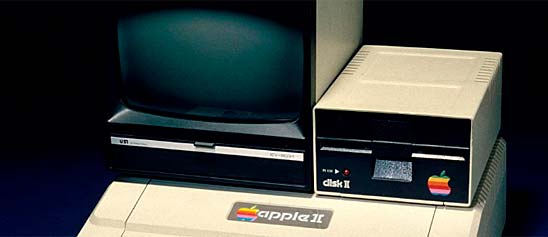
Computers & Business Machines - Overview

Imagine the loss, 100 years from now, if museums hadn't begun preserving the artifacts of the computer age. The last few decades offer proof positive of why museums must collect continuously—to document technological and social transformations already underway.
The Museum's collections contain mainframes, minicomputers, microcomputers, and handheld devices. A Cray2 supercomputer is part of the collections, along with one of the towers of IBM's Deep Blue, the computer that defeated reigning champion Garry Kasparov in a chess match in 1997. Other artifacts range from personal computers to ENIAC, the Altair, and the Osborne 1. Computer components and peripherals, games, software, manuals, and other documents are part of the collections. Some of the instruments of business include adding machines, calculators, typewriters, dictating machines, fax machines, cash registers, and photocopiers
"Computers & Business Machines - Overview" showing 6 items.
Altair 8800 Microcomputer
- Description
- Not long after Intel introduced its 8080 chip, a small firm in Albuquerque, New Mexico, named MITS (Micro Instrumentation and Telemetry Systems) announced a computer kit called the Altair, which met the social as well as technical requirements for a small personal computer. MITS succeeded where other, more established firms had failed, and it was their machine that inaugurated the personal computer age. MITS got its start in computing in 1971, when it introduced an electronic calculator kit. Several thousand sold before 1974, when the sharp reduction in calculator prices drove the company out of that market.
- H. Edward Roberts, the Florida-born former U.S. Air Force officer who headed MITS, decided to design a small, affordable computer around the Intel 8080. His daughter named the new machine after the star Altair. It was the first microcomputer to sell in large numbers. In January 1975, a photograph of the Altair appeared on the cover of the magazine Popular Electronics. The caption read "World's First Minicomptuer Kit to Rival Commercial Models." According to the magazine, the machine sold as a kit for $395, and assembled for $498. Roberts had hoped to break even by selling 200 Altairs. Within three months he had a backlog of 4,000 orders.
- The kit offered by MITS represented the minimum configuration of circuits that one could legitimately call a computer. It had little internal and no external memory, no printer, and no keyboard or other input device. An Altair fitted out with those items might cost $4,000—the equivalent to the cheapest PDP-8 minicomputer, a reliable and established performer. Most purchasers found the kit was difficult to assemble, unless they had experience with digital electronics and a workbench fitted out with sophisticated test equipment. And even if one assembled the kit correctly it was sometimes difficult to get the Altair to operate reliably. Gift of Forrest M. Mims III
- Location
- Currently not on view
- Date made
- 1974
- the head of MITS
- Roberts, H. Edward
- unspecified
- Micro Instrumentation and Telemetry Systems
- component parts are used
- Intel Corporation
- maker
- Micro Instrumentation and Telemetry Systems
- ID Number
- 1987.0066.01
- catalog number
- 1987.0066.01
- accession number
- 1987.0066
- Data Source
- National Museum of American History, Kenneth E. Behring Center
MITS Altair 680 Kit Computer
- Description
- The Altair 680 appeared about a year after Micro Instrumentation and Telemetry Systems (MITS) had introduced the Altair 8800, which many historians credit as the beginning of the home computer industry. In the Altair 680, MITS offered an update of the Altair 8800 that was based on the Motorola 6800 processor.
- Like the Altair 8800, the Altair 680 was a kit. For $293, users received circuit boards, capacitors, resistors, transistors, diodes, a power supply, an instruction manual, and a case in which to assemble it. Also like the 8800, the 680 had switches on the front that could be used to enter computer instructions, bit by bit. If customers were willing to pay $420, they could buy the computer already assembled. Neither the kit nor the assembled computer came with display, keyboard, or external storage device.
- The Motorola 6800 microprocessor ran at 500 KHZ, and the computer had a 1 KB of RAM and 1 KB of ROM, as well as support for a serial terminal and punch reader.
- The Altair 680 did not meet with the success that the 8800 had. Most users were now interested in buying computers that came with displays and keyboards, and were willing to pay more for them. The Altair 680 kit in the Smithsonian was never assembled.
- Location
- Currently not on view
- Date made
- 1976
- maker
- Micro Instrumentation and Telemetry Systems
- ID Number
- 1990.0653.01
- catalog number
- 1990.0653.01
- accession number
- 1990.0653
- Data Source
- National Museum of American History, Kenneth E. Behring Center
Altair 8800 Microcomputer
- Description
- Not long after Intel introduced its 8080 microprocessor, a small firm in Albuquerque, New Mexico, named MITS (Micro Instrumentation and Telemetry Systems) announced a computer kit called the Altair, which met the social as well as technical requirements for a small personal computer. MITS succeeded where other, more established firms had failed, and it was their machine that inaugurated the personal computer age. MITS got its start in computing in 1971, when it introduced an electronic calculator kit. Several thousand sold before 1974, when the sharp reduction in calculator prices drove the company out of that market.
- H. Edward Roberts, the Florida-born former U.S. Air Force officer who headed MITS, decided to design a small, affordable computer around the Intel 8080. His daughter named the new machine after the star Altair. It was the first microcomputer to sell in large numbers. In January 1975, a photograph of the Altair appeared on the cover of the magazine Popular Electronics. The caption read “World's First Minicomputer Kit to Rival Commercial Models.” According to the magazine, the machine sold as a kit for $395, and assembled for $498. Roberts had hoped to break even by selling 200 Altairs. Within three months he had a backlog of 4,000 orders.
- Enthusiasm for the Altair and other personal computers spawned computer hobbyist clubs, computer stores, newsletters, magazines, and conventions. By 1977, a host of companies, large and small, were producing microcomputers for a mass market. This phenomenon was abetted by a design decision to make the Altair an "open" machine. In other words, it passed data along a channel called a bus, whose specifications were not kept a secret. That way both MITS and other companies could add memory cards, cards to control a printer or other devices as long as they adhered to the published standards.
- This particular Altair was collected by the Smithsonian because it documents how hobbyists would outfit the machine with additional parts and components. The user added his own keyboard, monitor, disk drive, and 17 plug-in boards to expand the computer’s capability. Unfortunately, the original owner of the kit is unknown. The computer was donated to the Smithsonian by a second owner, Mark Sienkiewicz, who purchased it as a collectable item and never used it.
- Location
- Currently not on view
- Date made
- 1975
- maker
- Micro Instrumentation and Telemetry Systems
- ID Number
- 2007.0032.01
- catalog number
- 2007.0032.01
- accession number
- 2007.0032
- Data Source
- National Museum of American History, Kenneth E. Behring Center
Altair 8800 Microcomputer Monitor
- Description
- Cathode ray tube monitor for the Altair 8800 microcomputer.
- Not long after Intel introduced its 8080 microprocessor, a small firm in Albuquerque, New Mexico, named MITS (Micro Instrumentation and Telemetry Systems) announced a computer kit called the Altair, which met the social as well as technical requirements for a small personal computer. MITS succeeded where other, more established firms had failed, and it was their machine that inaugurated the personal computer age. MITS got its start in computing in 1971, when it introduced an electronic calculator kit. Several thousand sold before 1974, when the sharp reduction in calculator prices drove the company out of that market.
- H. Edward Roberts, the Florida-born former U.S. Air Force officer who headed MITS, decided to design a small, affordable computer around the Intel 8080. His daughter named the new machine after the star Altair. It was the first microcomputer to sell in large numbers. In January 1975, a photograph of the Altair appeared on the cover of the magazine Popular Electronics. The caption read “World's First Minicomputer Kit to Rival Commercial Models.” According to the magazine, the machine sold as a kit for $395, and assembled for $498. Roberts had hoped to break even by selling 200 Altairs. Within three months he had a backlog of 4,000 orders.
- Enthusiasm for the Altair and other personal computers spawned computer hobbyist clubs, computer stores, newsletters, magazines, and conventions. By 1977, a host of companies, large and small, were producing microcomputers for a mass market. This phenomenon was abetted by a design decision to make the Altair an "open" machine. In other words, it passed data along a channel called a bus, whose specifications were not kept a secret. That way both MITS and other companies could add memory cards, cards to control a printer or other devices as long as they adhered to the published standards.
- This particular Altair was collected by the Smithsonian because it documents how hobbyists would outfit the machine with additional parts and components. The user added his own keyboard, monitor, disk drive, and 17 plug-in boards to expand the computer’s capability. Unfortunately, the original owner of the kit is unknown. The computer was donated to the Smithsonian by a second owner, Mark Sienkiewicz, who purchased it as a collectable item and never used it.
- Location
- Currently not on view
- Date made
- 1975
- maker
- Micro Instrumentation and Telemetry Systems
- ID Number
- 2007.0032.03
- catalog number
- 2007.0032.03
- accession number
- 2007.0032
- Data Source
- National Museum of American History, Kenneth E. Behring Center
- No Image Available
Altair 8800 Microcomputer Disk Drive
- Description
- Floppy disk drive (8 inch) for the Altair 8800 microcomputer.
- Not long after Intel introduced its 8080 microprocessor, a small firm in Albuquerque, New Mexico, named MITS (Micro Instrumentation and Telemetry Systems) announced a computer kit called the Altair, which met the social as well as technical requirements for a small personal computer. MITS succeeded where other, more established firms had failed, and it was their machine that inaugurated the personal computer age. MITS got its start in computing in 1971, when it introduced an electronic calculator kit. Several thousand sold before 1974, when the sharp reduction in calculator prices drove the company out of that market.
- H. Edward Roberts, the Florida-born former U.S. Air Force officer who headed MITS, decided to design a small, affordable computer around the Intel 8080. His daughter named the new machine after the star Altair. It was the first microcomputer to sell in large numbers. In January 1975, a photograph of the Altair appeared on the cover of the magazine Popular Electronics. The caption read “World's First Minicomputer Kit to Rival Commercial Models.” According to the magazine, the machine sold as a kit for $395, and assembled for $498. Roberts had hoped to break even by selling 200 Altairs. Within three months he had a backlog of 4,000 orders.
- Enthusiasm for the Altair and other personal computers spawned computer hobbyist clubs, computer stores, newsletters, magazines, and conventions. By 1977, a host of companies, large and small, were producing microcomputers for a mass market. This phenomenon was abetted by a design decision to make the Altair an "open" machine. In other words, it passed data along a channel called a bus, whose specifications were not kept a secret. That way both MITS and other companies could add memory cards, cards to control a printer or other devices as long as they adhered to the published standards.
- This particular Altair was collected by the Smithsonian because it documents how hobbyists would outfit the machine with additional parts and components. The user added his own keyboard, monitor, disk drive, and 17 plug-in boards to expand the computer’s capability. Unfortunately, the original owner of the kit is unknown. The computer was donated to the Smithsonian by a second owner, Mark Sienkiewicz, who purchased it as a collectable item and never used it.
- Location
- Currently not on view
- Date made
- 1975
- maker
- Micro Instrumentation and Telemetry Systems
- ID Number
- 2007.0032.04
- catalog number
- 2007.0032.04
- accession number
- 2007.0032
- Data Source
- National Museum of American History, Kenneth E. Behring Center
- No Image Available
Altair 8800 Microcomputer Plug-In Cards
- Description
- Seventeen computer boards for the Altair 8800 microcomputer.
- Not long after Intel introduced its 8080 microprocessor, a small firm in Albuquerque, New Mexico, named MITS (Micro Instrumentation and Telemetry Systems) announced a computer kit called the Altair, which met the social as well as technical requirements for a small personal computer. MITS succeeded where other, more established firms had failed, and it was their machine that inaugurated the personal computer age. MITS got its start in computing in 1971, when it introduced an electronic calculator kit. Several thousand sold before 1974, when the sharp reduction in calculator prices drove the company out of that market.
- H. Edward Roberts, the Florida-born former U.S. Air Force officer who headed MITS, decided to design a small, affordable computer around the Intel 8080. His daughter named the new machine after the star Altair. It was the first microcomputer to sell in large numbers. In January 1975, a photograph of the Altair appeared on the cover of the magazine Popular Electronics. The caption read “World's First Minicomputer Kit to Rival Commercial Models.” According to the magazine, the machine sold as a kit for $395, and assembled for $498. Roberts had hoped to break even by selling 200 Altairs. Within three months he had a backlog of 4,000 orders.
- Enthusiasm for the Altair and other personal computers spawned computer hobbyist clubs, computer stores, newsletters, magazines, and conventions. By 1977, a host of companies, large and small, were producing microcomputers for a mass market. This phenomenon was abetted by a design decision to make the Altair an "open" machine. In other words, it passed data along a channel called a bus, whose specifications were not kept a secret. That way both MITS and other companies could add memory cards, cards to control a printer or other devices as long as they adhered to the published standards.
- This particular Altair was collected by the Smithsonian because it documents how hobbyists would outfit the machine with additional parts and components. The user added his own keyboard, monitor, disk drive, and 17 plug-in boards to expand the computer’s capability. Unfortunately, the original owner of the kit is unknown. The computer was donated to the Smithsonian by a second owner, Mark Sienkiewicz, who purchased it as a collectable item and never used it.
- Location
- Currently not on view
- Date made
- 1975
- maker
- Micro Instrumentation and Telemetry Systems
- ID Number
- 2007.0032.05
- catalog number
- 2007.0032.05
- accession number
- 2007.0032
- Data Source
- National Museum of American History, Kenneth E. Behring Center

