Introduction
Those learning and using mathematics have long consulted tables of numbers. The ancient Babylonians used clay tablets for this purpose. Papyrus, parchment, and paper all proved suitable for recording tables
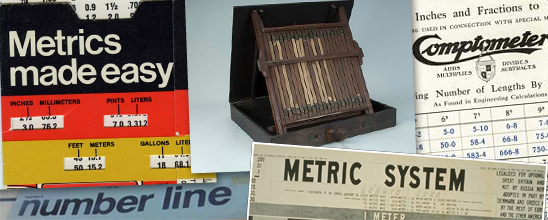
The use of Hindu-Arabic numbers in calculation, the advent of the printing press, the subsequent decline in the cost of paper, and the spread of numeracy all encouraged wider use of mathematical tables. Discoveries concerning trigonometric, logarithmic, and exponential functions offered new subjects for them. The mathematical charts and tables that survive in the collections of the National Museum of American History illustrate more mundane aspects of American life.
The first is the rise in educational institutions and reform movements in teaching, from the infant schools of the 1830s to the New Math of the mid-20th century.The second is the enduring difficulty of ordinary arithmetic, particularly the multiplication required in many areas of commerce.The third is the encounter of Americans with diverse units of money, weight, and measure; and their attempt to convert between units.The fourth is the smooth administration of the monetary transactions involved in banking, taxation, sales, shipping, and payroll. Finally, the collection well demonstrates the wealth of special purposes for which numerical data was needed. These included diverse aspects of manufacturing, gunnery, and public safety.
Our collection database is a work in progress. We may update this record based on further research and review. Learn more about our approach to sharing our collection online.
If you would like to know how you can use content on this page, see the Smithsonian's Terms of Use. If you need to request an image for publication or other use, please visit Rights and Reproductions.