Measuring & Mapping - Overview

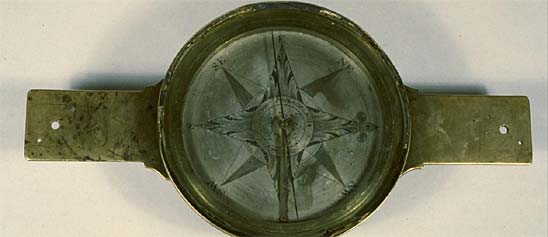
Where, how far, and how much? People have invented an astonishing array of devices to answer seemingly simple questions like these. Measuring and mapping objects in the Museum's collections include the instruments of the famous—Thomas Jefferson's thermometer and a pocket compass used by Meriwether Lewis and William Clark on their expedition across the American West. A timing device was part of the pioneering motion studies of Eadweard Muybridge in the late 1800s. Time measurement is represented in clocks from simple sundials to precise chronometers for mapping, surveying, and finding longitude. Everyday objects tell part of the story, too, from tape measures and electrical meters to more than 300 scales to measure food and drink. Maps of many kinds fill out the collections, from railroad surveys to star charts.
"Measuring & Mapping - Overview" showing 1 items.
- No Image Available
Bryan Gravimeter
- Description
- Gravimeters (gravity meters) are extremely precise instruments that measure the earth’s gravity at a specific location. Gravimeters are often used by prospectors to locate subterranean deposits of valuable natural resources (mainly petroleum) as well as by geodesists to study the shape of the earth and its gravitational field. Differences in topography, latitude, or elevation—as well as differences in subterranean density—all affect the force of gravity. Commonly, gravimeters are composed of a weight hanging on a zero-length spring inside a metal housing to negate the influence of temperature and wind. Gravity is then measured by how much the weight stretches the spring.
- This gravimeter was built in 1940 under the direction of Andrew Bonnell Bryan (1897 1989), a Ph.D. physicist who served for many years as Director of the Geophysics Division of the Carter Oil Co., in Tulsa, Oklahoma. It is similar to the other Carter gravimeter in the collection. The Carter Oil Co. donated this instrument to the Smithsonian in 1959.
- Ref: F. G. Boucher to P. W. Bishop, August 6, 1959, in NMAH accession file. Boucher was at this time Senior Research Associate at Jersey Production Research Co.
- Notes prepared by D. G. Gardner, August 19, 1959, in NMAH accession file 230,370.
- Location
- Currently not on view
- date made
- 1940
- maker
- Carter Oil Company
- ID Number
- AG*MHI-P-7659
- accession number
- 230569
- catalog number
- MHI-P-7659
- Data Source
- National Museum of American History, Kenneth E. Behring Center

