Photography - Overview

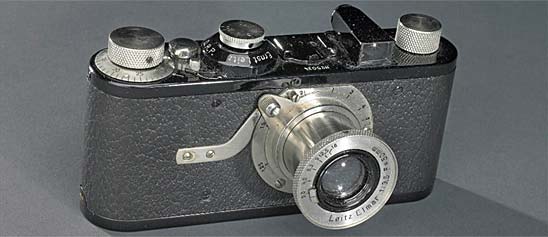
The millions of photographs in the Museum's collections compose a vast mosaic of the nation's history. Photographs accompany most artifact collections. Thousands of images document engineering projects, for example, and more record the steel, petroleum, and railroad industries.
Some 150,000 images capture the history, art, and science of photography. Nineteenth-century photography, from its initial development by W. H. F. Talbot and Louis Daguerre, is especially well represented and includes cased images, paper photographs, and apparatus. Glass stereographs and news-service negatives by the Underwood & Underwood firm document life in America between the 1890s and the 1930s. The history of amateur photography and photojournalism are preserved here, along with the work of 20th-century masters such as Richard Avedon and Edward Weston. Thousands of cameras and other equipment represent the technical and business side of the field.
"Photography - Overview" showing 3193 items.
Page 2 of 320
[Press cutting regarding Robert Scurlock's exhibition of work, 1961, copy negative : cellulose acetate photonegative]
- Summary
- Copy negative of press cutting regarding the selection of Robert Scurlock's photograph for exhibition at the 70th Annual Exposition of Professional Photography and the 9th National Industrial Photographic Conference in New York, 1961. No ink on negative. "KODAK - - SAFETY - - FILM" edge imprint. No Scurlock number
- Cite as
- Scurlock Studio Records, ca. 1905-1994, Archives Center, National Museum of American History
- Date
- 1961
- 1960-1970
- photographers
- Scurlock Studio (Washington, D.C.)
- film manufacturer
- Eastman Kodak Co
- Subject
- Scurlock, Robert S [Saunders] 1917-1994
- Local number
- Box 618.04.90
- AC0618.004.0000969.tif (scan number)
- Data Source
- Archives Center - NMAH
Graflex Speed Graphic 4x5 Press Camera
- Description
- Graflex cameras, made by the Folmer Schwing Company of Rochester, New York (later purchased by Eastman Kodak) were the preferred cameras of photojournalists and wartime correspondents for much of the early to mid-twentieth century. Their sturdy handheld construction adapted well for news and sports photography. The U.S. Department of the Army even commissioned combat-green versions of the Graflex cameras for use by military photographers in World War II and Korea. This popular Speed Graphic 4x5 inch film press camera was produced in the 1940s.
- From its invention in 1839, the camera has evolved to fit many needs, from aerial to underwater photography and everything in between. Cameras allow both amateur and professional photographers to capture the world around us. The Smithsonian’s historic camera collection includes rare and unique examples as well as popular models.
- Location
- Currently not on view
- date made
- ca 1940s
- maker
- Graflex, Inc.
- ID Number
- 1978.0234.01
- catalog number
- 1978.0234.01
- accession number
- 1978.0234
- catalog number
- 78.001
- Data Source
- National Museum of American History, Kenneth E. Behring Center
Kodak Baby Brownie Special Camera
- Description
- Popular from the 1939 World’s Fair into the 1950s, the Kodak Baby Brownie Special was a small black camera made of bakelite, with white shutter button and winding knob and featuring a braided strap. With a rigid view finder and focus-free lens, it produced eight 3¼ x 3 inch photographs from 127 film.
- From its invention in 1839, the camera has evolved to fit many needs, from aerial to underwater photography and everything in between. Cameras allow both amateur and professional photographers to capture the world around us. The Smithsonian’s historic camera collection includes rare and unique examples as well as popular models.
- Location
- Currently not on view
- date made
- ca 1950s
- maker
- Eastman Kodak Company
- ID Number
- 1979.0007.04
- catalog number
- 1979.0007.04
- accession number
- 1979.0007
- catalog number
- 79.007.04
- Data Source
- National Museum of American History, Kenneth E. Behring Center
ANSCO Pioneer Camera
- Description
- In the 1970s the GAF Corporation donated their historic camera collection to the Smithsonian. GAF was a film-based photographic supplies company which had a long history of purchasing other photographic business. GAF was the successor to the German based AGFA ASNCO and had U.S. headquarters in Binghamton, New York. Through AGFA ANSCO the company also held historic early photographic equipment from the important American camera makers Anthony and Scovill. This ANSCO Pioneer plastic and metal camera was produced from 1947-1953 and used 616 film.
- From its invention in 1839, the camera has evolved to fit many needs, from aerial to underwater photography and everything in between. Cameras allow both amateur and professional photographers to capture the world around us. The Smithsonian’s historic camera collection includes rare and unique examples of equipment, and popular models, related to the history of the science, technology, and art of photography.
- Location
- Currently not on view
- date made
- ca 1947-1953
- maker
- Ansco
- ID Number
- 1982.0390.125.1
- catalog number
- 1982.0390.125.1
- accession number
- 1982.0390
- catalog number
- 82.390.125.1
- Data Source
- National Museum of American History, Kenneth E. Behring Center
ANSCO Cadet Reflex with Flash
- Description
- In the 1970s the GAF Corporation donated their historic camera collection to the Smithsonian. GAF was a film based photographic supplies company which had a long history of purchasing other photographic business. GAF was the successor to the German based AGFA ASNCO and had U.S. headquarters in Binghamton, New York. Through AGFA ANSCO the company also held historic early photographic equipment from the important American camera makers Anthony and Scovill. This ANSCO Cadet Reflex camera with flash is just one of their plastic camera models for 127 film produced around 1960.
- From its invention in 1839, the camera has evolved to fit many needs, from aerial to underwater photography and everything in between. Cameras allow both amateur and professional photographers to capture the world around us. The Smithsonian’s historic camera collection includes rare and unique examples of equipment, and popular models, related to the history of the science, technology and art of photography.
- Location
- Currently not on view
- date made
- ca 1960
- maker
- Ansco
- ID Number
- 1982.0390.154
- catalog number
- 1982.0390.154
- accession number
- 1982.0390
- catalog number
- 82.390.154
- Data Source
- National Museum of American History, Kenneth E. Behring Center
ANSCO Shur Shot Camera
- Description
- In the 1970s the GAF Corporation donated their historic camera collection to the Smithsonian. GAF was a film based photographic supplies company which had a long history of purchasing other photographic business. GAF was the successor to the German based AGFA ASNCO and had U.S. headquarters in Binghamton, New York. Through AGFA ANSCO the company also held historic early photographic equipment from the important American camera makers Anthony and Scovill. This ANSCO Shur Shot camera was possibly the most popular of their box cameras, produced about 1948. It was a basic box camera with a vertically stripped aluminum front and used 120 film.
- From its invention in 1839, the camera has evolved to fit many needs, from aerial to underwater photography and everything in between. Cameras allow both amateur and professional photographers to capture the world around us. The Smithsonian’s historic camera collection includes rare and unique examples of equipment, and popular models, related to the history of the science, technology, and art of photography.
- Location
- Currently not on view
- date made
- ca 1948
- maker
- Ansco
- ID Number
- 1982.0390.166
- catalog number
- 1982.0390.166
- accession number
- 1982.0390
- catalog number
- 82.390.166
- Data Source
- National Museum of American History, Kenneth E. Behring Center
Vest Pocket Autographic Kodak Camera
- Description
- Kodak Vest Pocket cameras were first introduced in 1914 for producing postcards. On the Autographic models, a stylus stored at the back of the camera allowed for marking negatives with information, dates, or titles. These cameras remained popular for decades, including many models marketed to soldiers and families for capturing memories during the World War I and II eras.
- From its invention in 1839, the camera has evolved to fit many needs, from aerial to underwater photography and everything in between. Cameras allow both amateur and professional photographers to capture the world around us. The Smithsonian’s historic camera collection includes rare and unique examples of equipment, and popular models, related to the history of the science, technology, and art of photography.
- Location
- Currently not on view
- date made
- 1910s
- maker
- Eastman Kodak Company
- ID Number
- 1983.0066.01
- catalog number
- 1983.0066.01
- accession number
- 1983.0066
- catalog number
- 83.066
- Data Source
- National Museum of American History, Kenneth E. Behring Center
Xerox 914 Plain Paper Copier
- Description
- Introduced in 1959, the Xerox 914 plain paper copier revolutionized the document-copying industry. The culmination of inventor Chester Carlson's work on the xerographic process, the 914 was fast and economical. One of the most successful Xerox products ever, a 914 model could make 100,000 copies per month. In 1985, the Smithsonian received this machine, number 517 off the assembly line. It weighs 648 pounds and measures 42" high x 46" wide x 45" deep.
- Location
- Currently not on view
- Date made
- 1960
- maker
- Haloid Xerox Corporation
- ID Number
- 1985.0669.01
- catalog number
- 1985.0669.01
- accession number
- 1985.0669
- catalog number
- 85.669.01
- Data Source
- National Museum of American History, Kenneth E. Behring Center
Kodak Petite Camera
- Description
- Since Kodak introduced the Brownie in 1900, a variety of easy-to-use cameras have been marketed, especially to women. The Kodak Petite from 1935, part of the Kodak Coquette set, came with a matching compact and lipstick case in a variety of color choices so that one might use it as an accessory to fashionable outfits.
- Location
- Currently not on view
- Date made
- 1935
- maker
- Eastman Kodak Company
- ID Number
- 1995.0046.01
- catalog number
- 1995.0046.01
- accession number
- 1995.0046
- Data Source
- National Museum of American History, Kenneth E. Behring Center
Kodak Disc 4000
- Description
- The Kodak Disc 4000 camera was introduced in the 1980s, incorporating a new version of the popular disc format film cartridges used in 110 cameras. A round disc was prepared with fifteen 8x10mm negatives for drop-in camera loading. Unfortunately, since the negatives were so small, most printed images were soft focus and unsatisfactory in quality. Eastman Kodak continued production of the camera until 1998, when their new Advanced Photo System process and Advantix cameras had been introduced to the market.
- From its invention in 1839, the camera has evolved to fit many needs, from aerial to underwater photography and everything in between. Cameras allow both amateur and professional photographers to capture the world around us. The Smithsonian’s historic camera collection includes rare and unique examples of equipment, and popular models, related to the history of the science, technology, and art of photography.
- Location
- Currently not on view
- date made
- ca 1980s
- maker
- Eastman Kodak Company
- ID Number
- 1997.0321.10
- accession number
- 1997.0321
- catalog number
- 1997.0321.10
- Data Source
- National Museum of American History, Kenneth E. Behring Center

